



Helping cricket teams make data-driven strategic decisions by predicting match outcomes using supervised machine learning and historical performance data.
Project Overview
Industry
Sports Analytics
Client
BCCI (Academic Case Study)
Project Type
Machine Learning Classification
Duration
2 Weeks
Target
Predict Win/Loss
Dataset
2,930 Records
Business Problem
The BCCI needed a data-driven solution to predict India’s match outcomes using historical cricket performance data, enabling coaches and analysts to optimize team selection, match strategy, and venue planning.
Business Objectives
Predict Match Outcome
Improve Team Selection
Identify Winning Factors
Support Strategic Planning
Dataset
2930 Matches
23 Features
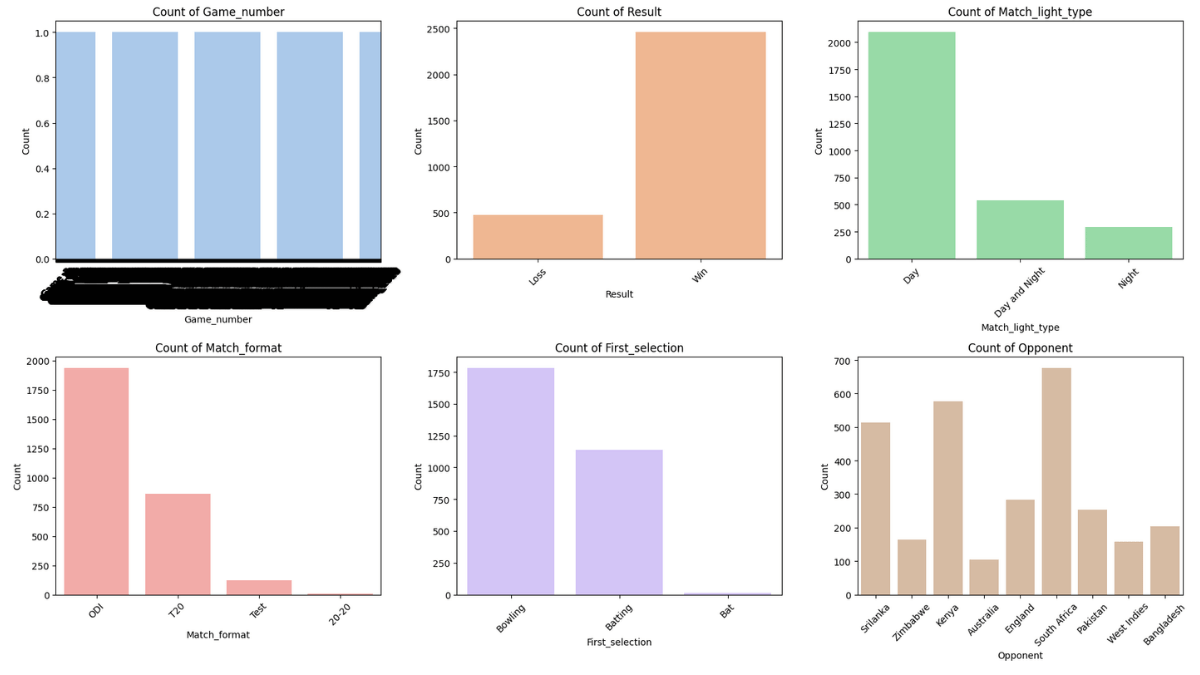
84% Winning Matches
Target Result
Data Understanding
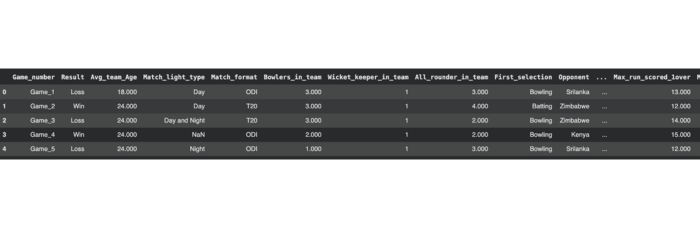
Raw Dataset
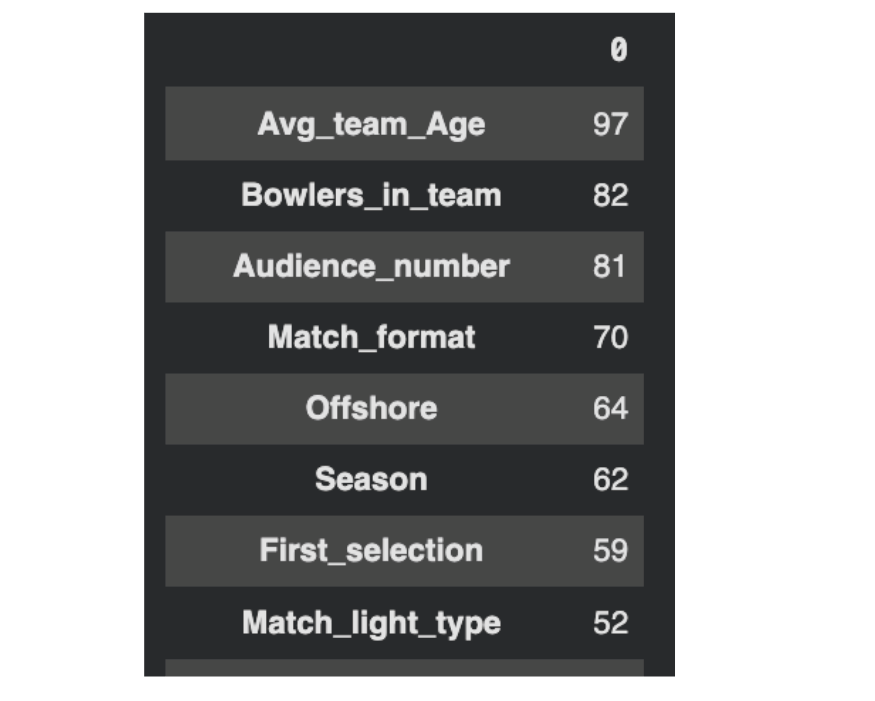
Missing Values
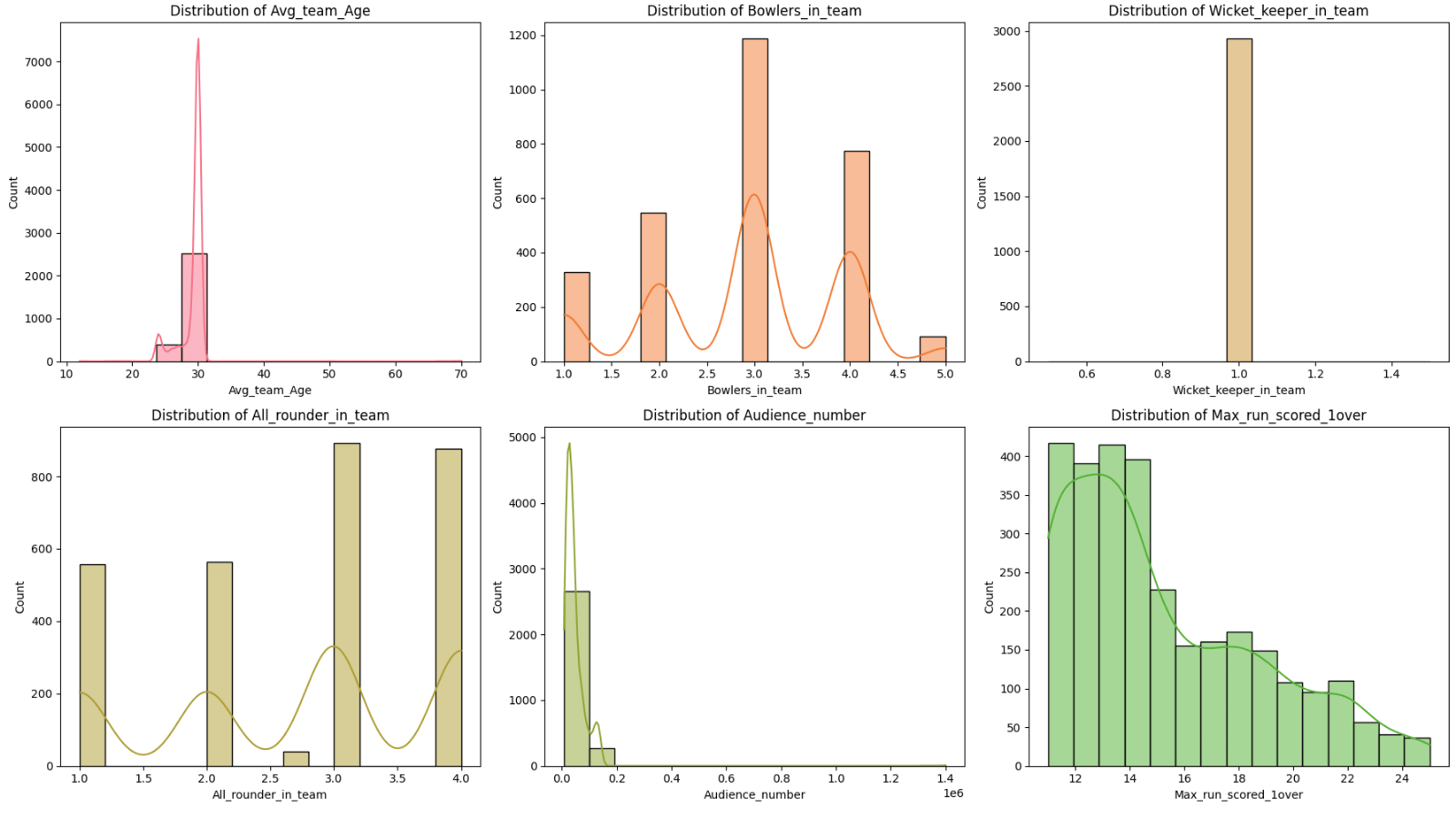
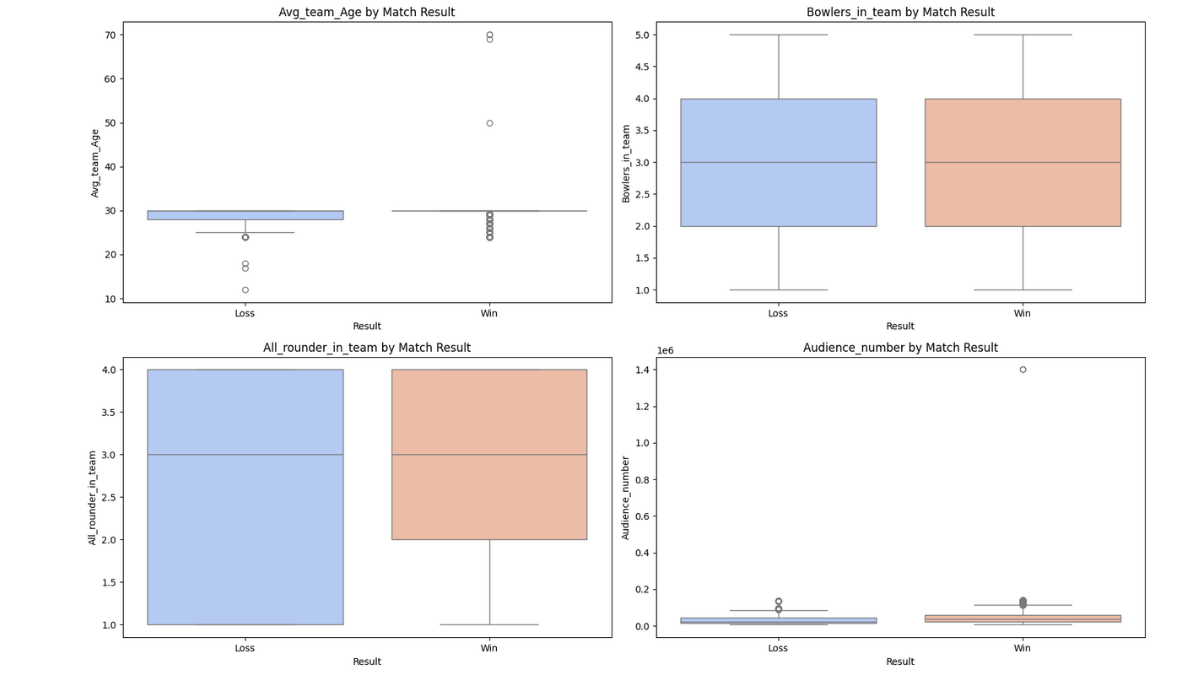
EDA
Data Inspection
Data Cleaning
Data Cleaning
Missing Value Treatment
The dataset contained missing values across several features. Since the percentage of missing data was relatively low, appropriate statistical imputation techniques were applied to preserve data integrity while minimizing information loss.
Duplicate Detection
Removed duplicate records and validated dataset integrity for reliable analysis.
Data Type Conversion
Several columns contained inconsistent data formats that required correction before modeling.
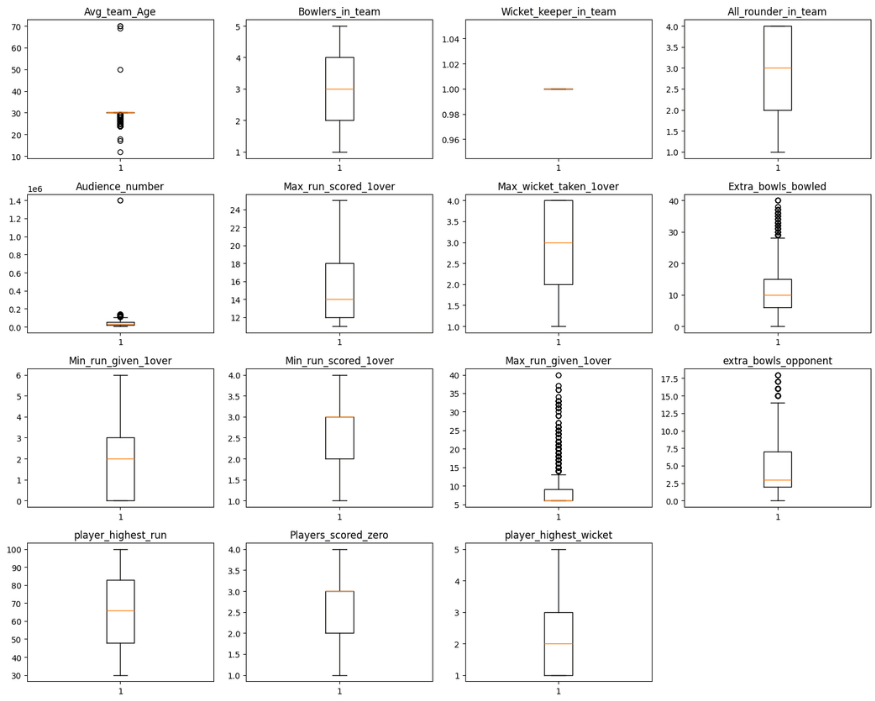
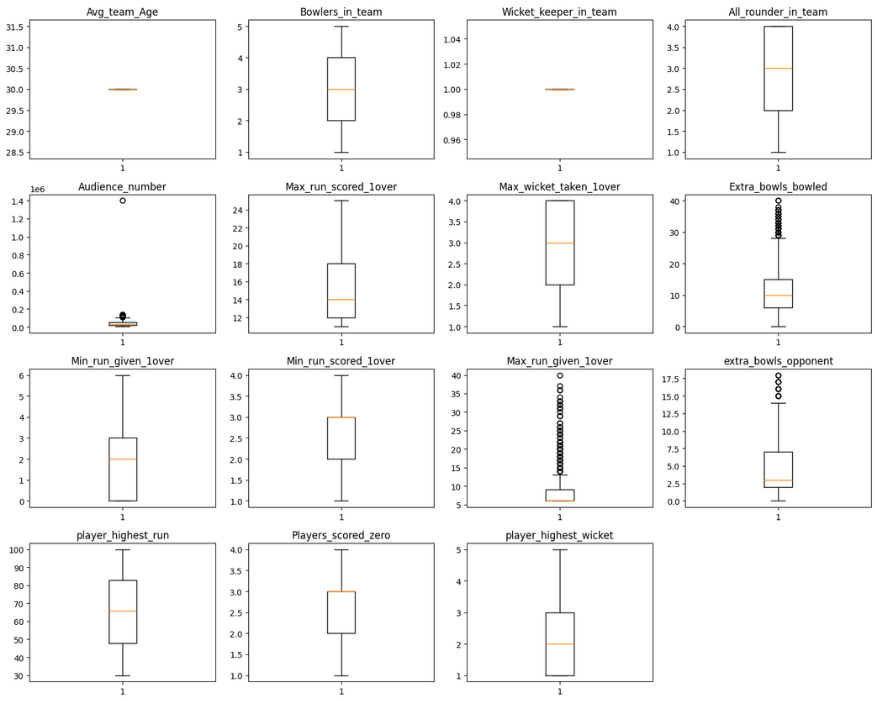
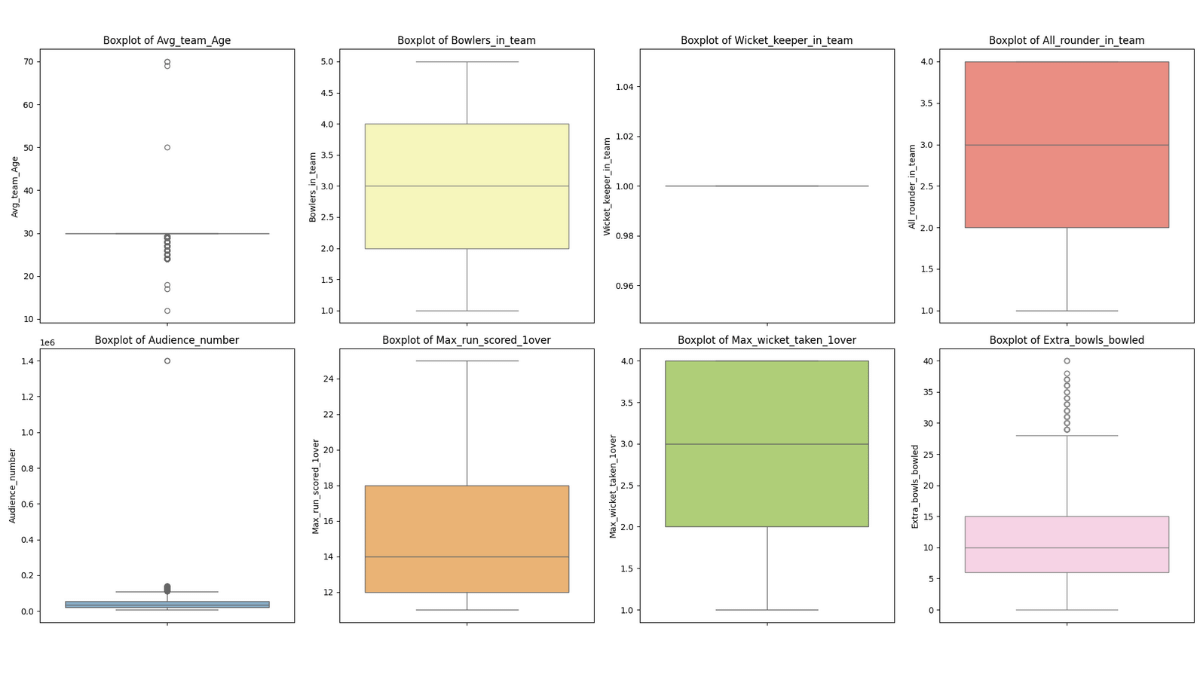
Outlier Treatment
Detected and capped outliers using IQR while preserving meaningful data variability.


Exploratory Data Analysis


Key Insights
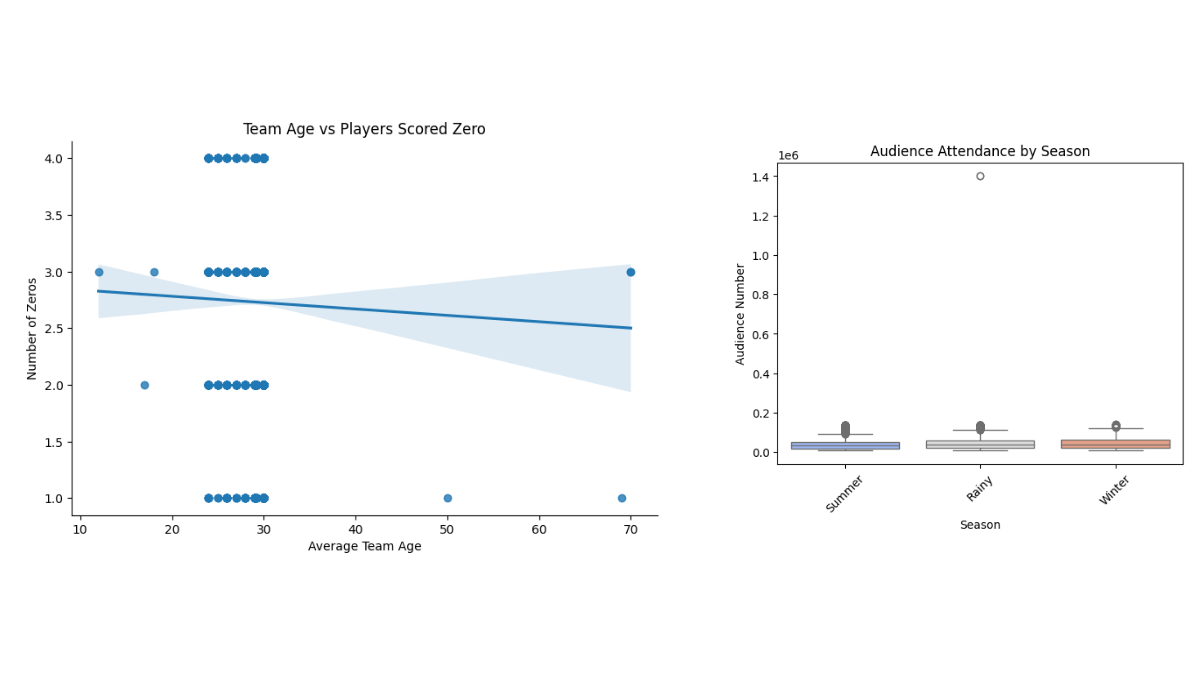
Home matches had significantly higher winning probability.
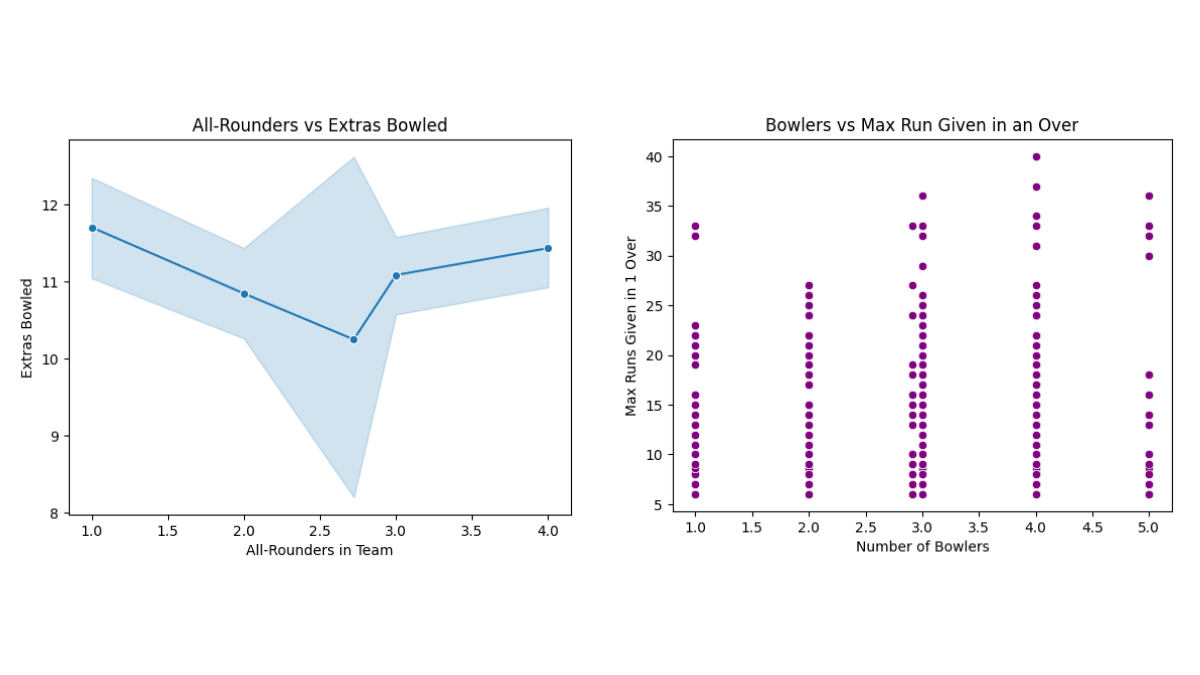
Teams with 2+ all-rounders performed better.
Audience size positively influenced match outcomes.
Batting first slightly improved winning chances.
Feature Engineering
Feature engineering played a crucial role in preparing the dataset for machine learning. Raw features were transformed into meaningful numerical representations while preserving valuable business information. This process improved model performance, reduced redundancy, and ensured compatibility with classification algorithms.
Raw Features
Feature Scaling
Final Dataset
Encoding
Feature Selection
Machine Learning Pipeline
A structured machine learning workflow was implemented to train, optimize, and evaluate multiple classification algorithms. Each model was assessed using standard performance metrics, and the best-performing model was selected based on its predictive accuracy, interpretability, and business applicability.
Data Split
Naive Bayes
Decision Tree
Final Model
Logistic Regression
KNN
Evaluation
Model Comparison
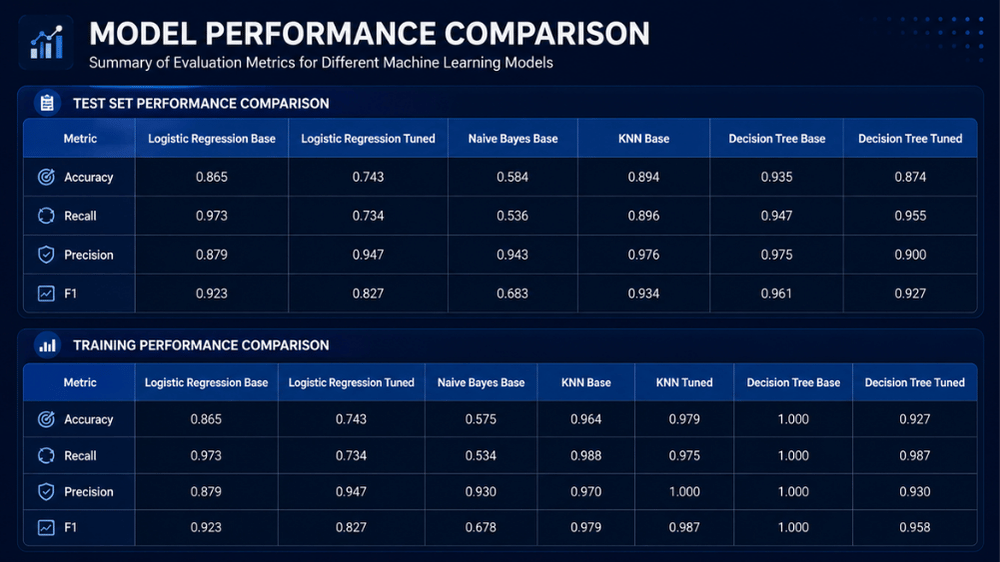
Four supervised machine learning algorithms were trained and evaluated using the same dataset. Each model was assessed using multiple performance metrics to identify the most reliable and business-ready solution for predicting cricket match outcomes.
Selected Model
🏆 Tuned Decision Tree
Accuracy 87.4%
✔ High Predictive Performance
Achieved an overall 87.4% test accuracy with strong precision and recall, delivering reliable predictions for match outcomes.
✔ Excellent Generalization
The tuned model reduced overfitting through hyperparameter optimization, resulting in consistent performance on both training and testing datasets.
✔ Highly Interpretable
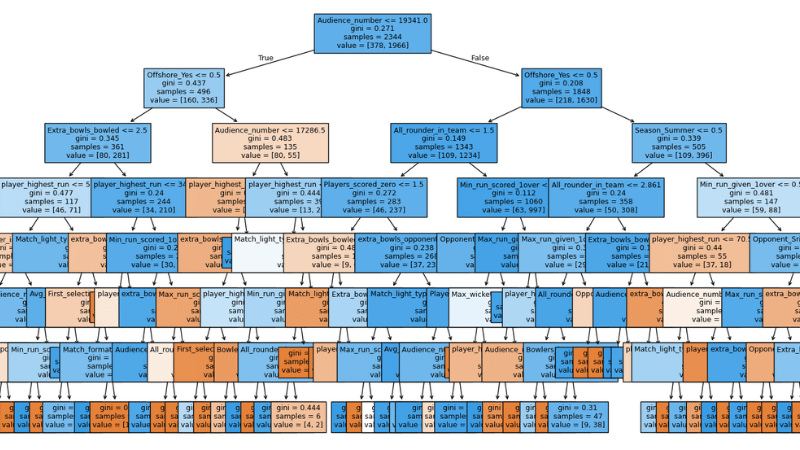
The Decision Tree provides clear decision rules that explain why a match is predicted as a win or loss, making the model suitable for coaches, analysts, and stakeholders.
✔ Business-Oriented Insights
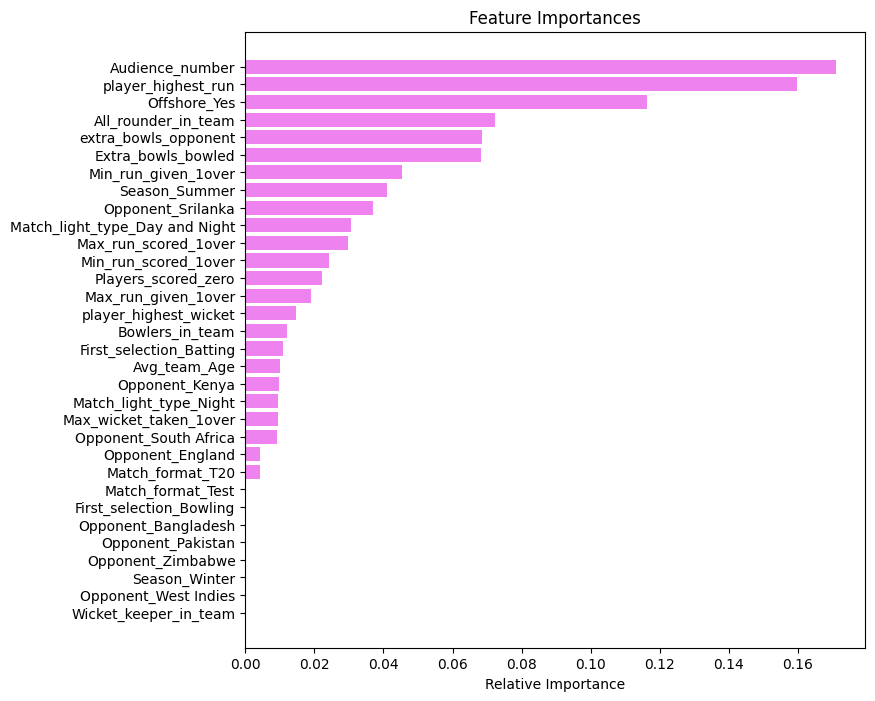
Feature importance analysis identified the most influential variables affecting match outcomes, enabling data-driven decisions for team selection and match strategy.
✔ Production Ready
The model offers a good balance between prediction accuracy, computational efficiency, and explainability, making it suitable for deployment in a real-world sports analytics workflow.
Feature Importance
Top Influential Features:
Audience_number — Most important, suggesting match popularity has strong predictive power.
player_highest_run, Offshore_Yes, and All_rounder_in_team — Strong impact on predictions.
Bowling-related stats (extra_bowls_opponent, Extra_bowls_bowled, Min_run_given_1over) also contribute meaningfully.
Lower Importance:
Features like Wicket_keeper_in_team, Opponent_West Indies, and Season_Winter have very little influence.
Business Recommendations
Optimize team composition
Prioritize home conditions
Maintain disciplined bowling
Select balanced playing XI
Monitor player form
Challenges Faced
Missing Data
Identified and imputed missing values using mean and mode, ensuring a complete, consistent, and model-ready dataset for reliable analysis.
Class Imbalance
Addressed class imbalance by evaluating Precision, Recall, and F1-Score, selecting the most reliable model for robust predictive performance.
Feature Selection
Reduced feature redundancy using VIF analysis and feature selection, improving model stability, reducing multicollinearity, and enhancing predictive performance.
Overfitting
Applied Decision Tree pruning by limiting depth, optimizing splits and leaf nodes, and using cross-validation, improving generalization while reducing overfitting.
Hyperparameter Tuning
Used GridSearchCV to optimize Decision Tree hyperparameters, improving predictive performance, reducing overfitting, and maintaining model interpretability.
Add comment
You must be logged in to post a comment.